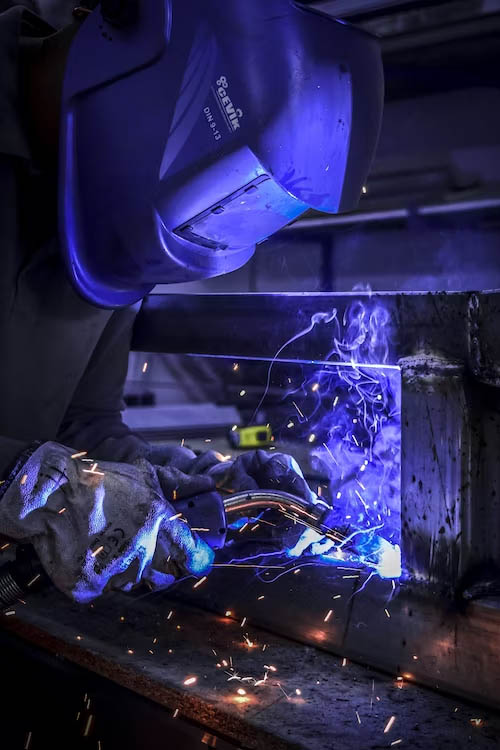







MIG welding works by using a wire electrode to create an electric arc with the workpiece, melting and joining the metals together. This process is also known as Gas Metal Arc Welding (GMAW). MIG welding is a popular welding method due to its simplicity and versatility, making it suitable for various applications. It involves the use of a continuous solid wire electrode, a shielding gas, and a welding gun to join the metals.
The wire electrode acts as the filler material, while the shielding gas protects the weld from atmospheric contamination. Understanding how MIG welding works is essential for anyone interested in metal fabrication or welding processes. Let’s delve deeper into the fascinating world of MIG welding and explore its various applications and advantages.
Introduction To Mig Welding
MIG welding, also known as Gas Metal Arc Welding (GMAW), works by using a wire welding electrode on a spool. The electrode is continuously fed through a welding gun and into the weld pool. A shielding gas is also released through the welding gun to protect the weld from atmospheric contamination. This process creates a strong and precise weld.
Basics Of Mig Welding
MIG welding, or Metal Inert Gas welding, is a popular welding process that uses a consumable wire electrode to create strong and durable welds.
Historical Development
MIG welding was developed in the 1940s as a more efficient and versatile alternative to traditional welding methods.
Equipment Essentials
Discover the inner workings of Mig welding, a process where a wire electrode melts to join metals. Equipment essentials include a power source, wire feed unit, and shielding gas for a seamless welding experience.
MIG welding is a popular welding process that requires some essential pieces of equipment. To perform MIG welding, you need a welding machine, wire feeder, welding gun, shielding gas, and welding wire. We will discuss the essential components of a MIG welding machine, the types of wire feeders, and their functions.
Welding Machine Components
A MIG welding machine comprises four essential components: the power source, wire feed system, welding gun, and shielding gas system. The power source generates an electric arc that melts the welding wire, while the wire feed system feeds the welding wire to the weld pool.
The welding gun is used to control the wire feed speed and direct the weld pool, while the shielding gas system protects the weld pool from atmospheric contamination.
Types Of Wire Feeders
Wire feeders are used to feed the welding wire to the welding gun. There are two types of wire feeders: push-pull and spool guns. Push-pull wire feeders are commonly used in industrial settings, where long welding cables are required.
The push-pull wire feeder consists of a motor that drives the wire through a long, flexible cable to the welding gun. This mechanism reduces the risk of wire tangling and increases the wire feed rate, making it ideal for welding thick materials.
Spool guns, on the other hand, are used for welding thin materials, such as aluminum. The spool gun is connected directly to the welding gun, and the welding wire is fed through a short cable. This configuration reduces the risk of wire tangling and provides better control over the weld pool.
The essential components of a best MIG welding machine are the power source, wire feed system, welding gun, and shielding gas system. The two types of wire feeders used in MIG welding are push-pull and spool guns, which have different applications depending on the thickness of the material being welded.
Mig Welding Process
Steps In Mig Welding
MIG welding involves feeding a solid wire electrode through a welding gun, which joins the two metal pieces together.
- Prepare the materials to be welded and secure them in place.
- Adjust the welding machine settings based on the material thickness.
- Hold the welding gun at the correct angle and distance from the workpiece.
- Start the welding process by pulling the trigger on the welding gun.
- Melt the wire electrode to create a weld pool and join the materials.
Role Of Shielding Gas
Shielding gas is essential in MIG welding as it protects the weld pool from atmospheric contamination.
- Prevents oxidation and other impurities from affecting the weld.
- Creates a stable arc for better control and quality of the weld.
Types Of Mig Welding
MIG welding, or Metal Inert Gas welding, is a versatile and widely used welding process that offers various techniques for different applications. Understanding the different types of MIG welding can help you choose the right method for your specific project. Let’s take a closer look at the types of MIG welding and how they work.
Metal Inert Gas Vs Metal Active Gas
Metal Inert Gas (MIG) and Metal Active Gas (MAG) welding are the two primary types of MIG welding. The main difference between the two lies in the type of shielding gas used. MIG welding uses inert gases such as argon or helium, while MAG welding uses a combination of inert gas and an active gas, such as carbon dioxide.
Pulsed Mig Welding
Pulsed MIG welding is a variation of traditional MIG welding that involves a pulsing current to control the heat input into the welding material. This technique is particularly useful for welding thin materials and for reducing spatter, heat distortion, and overall weld appearance. It allows for better control and precision, making it suitable for a wide range of applications.
Materials And Their Compatibility
MIG welding, also known as Gas Metal Arc Welding (GMAW), is a versatile and widely used welding process that offers excellent speed and efficiency. Understanding the materials used and their compatibility is crucial for successful MIG welding.
Commonly Welded Metals
MIG welding is commonly used for welding steel, stainless steel, and aluminum. These metals are well-suited for MIG welding due to their compatibility with the process and the availability of suitable filler materials.
Material Thickness Considerations
When considering material thickness for MIG welding, it’s essential to take into account the capabilities of the welding equipment and the specific welding parameters required for different thicknesses. Thinner materials require lower amperage and voltage settings, while thicker materials demand higher settings to ensure proper penetration and fusion.
Setting Up A Mig Welder
Setting up a MIG welder correctly is crucial to achieving high-quality welds. The process involves adjusting voltage and wire speed, as well as selecting the correct gas mixture. Proper setup ensures smooth welding and a strong, clean bond.
Adjusting Voltage And Wire Speed
Before starting the welding process, it’s essential to adjust the voltage and wire speed settings on the MIG welder. This helps control the heat input and the rate at which the filler wire is fed into the weld pool, ensuring a consistent and precise weld.
Selecting The Correct Gas Mixture
The choice of gas mixture plays a vital role in MIG welding. A suitable gas mixture, such as a combination of argon and carbon dioxide, helps protect the weld pool from atmospheric contamination, resulting in clean and strong welds.
Common Mig Welding Techniques
MIG welding, also known as Gas Metal Arc Welding (GMAW), is a widely used welding process that involves the use of a continuous solid wire electrode and shielding gas to join two or more metal pieces. Various MIG welding techniques are employed to ensure strong and durable welds.
Understanding the common MIG welding techniques is essential for achieving high-quality results and ensuring the structural integrity of the welded components.
Push And Pull Techniques
The push and pull techniques refer to the direction in which the welder moves the welding gun during the welding process. The push technique involves pushing the welding gun away from the weld pool, while the pull technique involves pulling the welding gun towards the weld pool.
Both techniques have their distinct applications based on the type of joint and welding position, and the choice between these techniques can significantly impact the weld bead profile and penetration.
Welding In Various Positions
Welding in various positions, including flat, horizontal, vertical, and overhead, is a crucial aspect of MIG welding. Each position presents unique challenges, and welders must adapt their techniques to ensure proper penetration and fusion.
Welding in the flat position is the most common and straightforward, while welding in the overhead position requires special attention to prevent weld defects due to gravity.
Troubleshooting Mig Welding Issues
MIG welding operates by feeding a consumable wire electrode through a welding gun, forming an electric arc with the workpiece. Troubleshooting MIG welding problems involves addressing issues like poor wire feeding, inconsistent arc, or inadequate shielding gas flow to ensure quality welds.
Equipment Maintenance Tips
Troubleshooting MIG Welding Issues: MIG welding can encounter problems like porosity, spatter, and cracking. Addressing these issues promptly is essential.
Addressing Weld Defects
Porosity occurs due to contamination or shielding gas issues. Check gas flow and clean the base metal. Spatter is tiny droplets of molten metal that can cause a messy weld. Adjust wire feed speed to reduce spatter. Cracking can result from rapid cooling or high hydrogen levels. Control cooling rate and use low-hydrogen electrodes.
Equipment Maintenance Tips
Regularly inspect and clean the contact tip, nozzle, and liner to ensure smooth wire feeding. Check the ground connection and cables for any damage or loose connections that can affect welding quality.
Maintain the gas regulator to ensure a consistent flow of shielding gas, preventing porosity and spatter issues. Consider calibrating the machine periodically to ensure accurate settings for optimal welding performance.
Safety Precautions
MIG welding is a popular welding process that uses an electric arc and a consumable wire electrode. Safety precautions are essential when working with MIG welding. Welders must wear protective clothing, gloves, and helmets to avoid burns, eye damage, and electric shock.
Mig welding is a popular welding process that involves the use of an electric arc to melt and join metal pieces together. However, this process can be dangerous if proper safety precautions are not taken. We will discuss some of the safety measures that should be followed when using Mig welding.
Personal Protective Equipment
Personal protective equipment (PPE) is essential when performing Mig welding. It includes a welding helmet, gloves, safety glasses, and protective clothing. The welding helmet protects the eyes and face from the bright light and heat produced during welding.
Welding gloves protect the hands from burns and electric shock. Safety glasses protect the eyes from sparks and debris. Protective clothing, such as a welding jacket, protects the body from heat and sparks.
See also Vertical MIG Welding: Should You Weld Up or Down?
Safe Workspace Practices
Creating a safe workspace is crucial when performing Mig welding. The work area should be well-ventilated to prevent the accumulation of harmful fumes. The welding surface should be clean and free from any flammable materials. Additionally, it’s important to keep a fire extinguisher nearby in case of an emergency.
Proper safety precautions should always be followed when performing Mig welding. Personal protective equipment should be worn at all times, and safe workspace practices should be adhered to. By following these safety measures, you can ensure a safe and successful Mig welding experience.
Advanced Applications
Discover the inner workings of Mig Welding, a process where an electric arc forms between a consumable wire electrode and the metal being welded, creating strong, precise bonds. This advanced application is widely used in industries for its efficiency and versatility in joining metal components.
Advanced Applications MIG welding finds advanced applications in various industries due to its efficiency and precision. Robotics in MIG Welding Robotic systems are used for automating MIG welding processes in large-scale manufacturing.
Innovations in Welding Technology Recent advancements focus on enhancing MIG welding precision, speed, and control. Incorporating sensors and AI optimizes welding parameters for superior results.
Mig Welding Vs Other Welding Techniques
MIG welding, also known as Gas Metal Arc Welding (GMAW), uses a wire electrode and shielding gas to join metals. This technique offers high productivity and can be used on a variety of metals, making it popular in industrial applications.
Unlike other welding methods, MIG welding is known for its ease of use and versatility.
Choosing the Right Method For Your Project
MIG welding and other welding techniques differ in their processes and applications. MIG welding, also known as Gas Metal Arc Welding, uses a wire electrode to join metals. On the other hand, TIG welding relies on a tungsten electrode and requires a separate filler material. Stick welding, or Shielded Metal Arc Welding, uses a flux-coated electrode for welding. When comparing TIG and Stick welding to MIG welding, consider factors like speed, precision, and ease of use.
TIG welding offers greater precision but is slower compared to MIG welding. Stick welding is versatile but may not provide as clean a finish as MIG welding. To choose the right welding method for your project, evaluate the metal type, thickness, and desired outcome.
For thin metals and intricate work, TIG welding might be ideal. For thicker metals and faster production, MIG welding is a suitable choice. Stick welding is preferred for outdoor projects and rough surfaces.
Understanding the differences between MIG welding and other techniques allows welders to select the most appropriate method based on project requirements.
Enhancing Weld Quality
MIG welding, also known as Gas Metal Arc Welding (GMAW), is a widely used welding process that offers great flexibility and speed. Enhancing weld quality in MIG welding involves the development of skilled techniques and the implementation of quality control measures.
Skill Development
Improving weld quality in MIG welding requires continuous skill development. Welders need to master the precise control of the welding torch and wire feed, as well as the adjustment of voltage and wire speed. Consistent practice and training help in honing these skills, leading to higher quality welds with minimal defects.
Quality Control Measures
Implementing quality control measures is crucial for ensuring weld quality in MIG welding. This involves inspecting the materials before welding, maintaining proper cleanliness of the workpiece, and monitoring the welding parameters during the process. Regular calibration of equipment and adherence to industry standards contribute to the overall improvement of weld quality.
Conclusion
Understanding how MIG welding works is essential for beginners and professionals alike. The process’s simplicity and effectiveness make it a popular choice in various industries. By mastering the fundamentals, welders can create strong and durable connections with ease. Explore and practice to enhance your welding skills.