





If your MIG welder keeps popping, you’re probably asking yourself what’s going wrong—and how to fix it fast. That annoying crackle can be as frustrating as scrubbing through tough stain removal challenges or struggling with bathroom cleaning when dirt just won’t lift. Much like disinfecting surfaces requires the right cleaning tips and products, smooth welding depends on proper machine settings, wire feed speed, and keeping your equipment clean.
Homeowners, renters, and DIY enthusiasts often face this issue, but the good news is it’s usually easy to solve. With the right know-how, you can stop the popping, achieve cleaner welds, and save both time and materials—just like the satisfaction of a spotless home after using the right cleaning techniques. In this guide, we’ll break down the most common reasons for MIG welder popping and show you step-by-step solutions.
What Causes MIG Welder Popping?
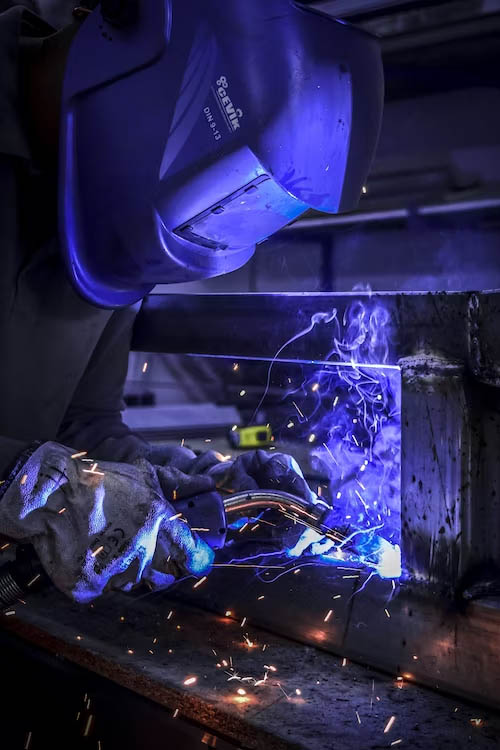
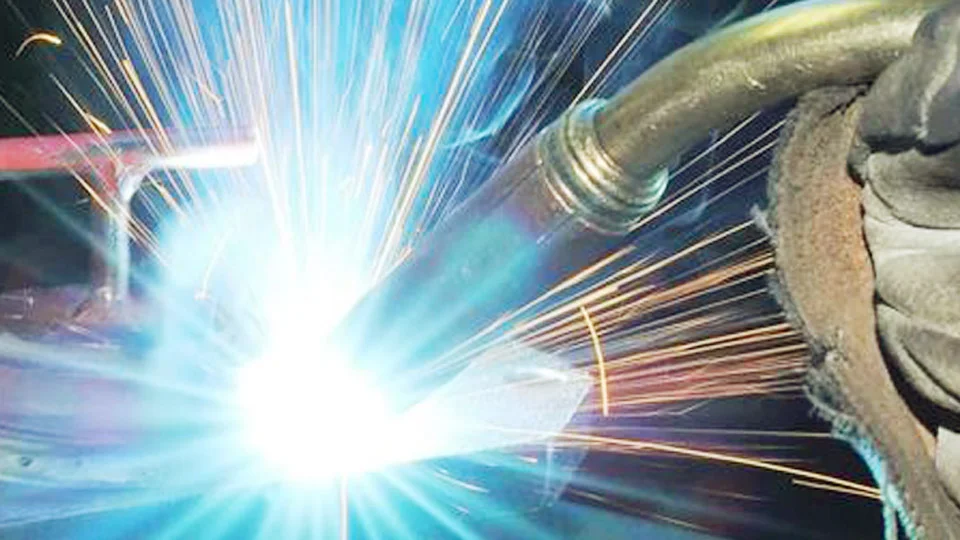
Popping in MIG welding happens when the arc isn’t stable, causing the wire to burn unevenly or spatter. Think of it like a car engine misfiring—it’s trying to run, but something’s disrupting the flow. The most common culprits are improper wire speed, incorrect voltage, poor shielding gas coverage, or issues with your equipment setup.
Sometimes, it’s as simple as dirty metal or a worn-out contact tip. Let’s break these down so you know exactly what’s going on when your welder starts acting up.
When I was starting out, I’d crank the wire speed thinking faster meant better. Big mistake. The weld would pop like popcorn, leaving a mess of spatter and a weak bead. It took a few scrapped projects to learn that balance is everything in MIG welding. Below, I’ll cover the main reasons your welder is popping and how to fix each one.
Incorrect Wire Speed: The Most Common Culprit
Wire speed controls how fast the filler wire feeds into the weld pool. Too fast, and the wire stubs into the metal, causing pops and spatter. Too slow, and it burns back toward the contact tip, creating an erratic arc. Both scenarios disrupt the smooth transfer of metal, leading to that dreaded popping sound.
How to Fix It
Start by testing your wire speed on a scrap piece of the same material. Hold the gun steady, pull the trigger, and listen. A good weld sounds like frying bacon—a consistent sizzle. If it’s popping, adjust the wire speed knob in small increments.
For example, if you’re welding 1/8-inch mild steel with 0.035-inch wire, aim for 80–380 inches per minute (IPM), depending on your machine’s settings. Thinner materials need faster speeds, while thicker ones require slower feeds.
Pro Tip
Check your welder’s manual for a wire speed chart. These give you a ballpark, but don’t trust them blindly—every machine and material is a little different. Fine-tune until the arc feels smooth and the bead looks even.
Voltage Settings: Too High or Too Low?
Voltage controls the heat of the arc. Too much voltage burns the wire back into the tip, causing pops and spatter. Too little, and you get a “cold weld” where the wire doesn’t fully melt into the pool, leading to weak joints and popping. I’ve seen new welders set their voltage based on guesswork, only to end up with a weld that looks like a lumpy mess.
How to Adjust Voltage
Refer to your welder’s chart for recommended voltage based on material thickness and wire diameter. For instance, welding 1/4-inch mild steel with 0.035-inch wire typically needs 18–22 volts. Start at the lower end, run a test bead, and increase in small steps until the arc stabilizes. If the weld is burning through or spattering excessively, dial it back.
Common Mistake
Don’t swing the voltage dial wildly. Small adjustments—half a volt at a time—make a big difference. Test on scrap metal to avoid ruining your project.
Shielding Gas Issues: Are You Protected?
MIG welding relies on shielding gas (usually a mix of argon and CO2) to protect the weld pool from oxygen and nitrogen in the air. If the gas flow is too low, too high, or the wrong mix, you’ll get popping and porosity (tiny holes in the weld). I once ran out of gas mid-weld and didn’t notice until the bead looked like Swiss cheese—lesson learned.
Checking Gas Flow
Set your gas flow to 20–35 cubic feet per hour (CFH) for most applications. Too low (below 15 CFH), and the weld pool gets contaminated, causing pops. Too high (above 40 CFH), and turbulence disrupts the arc. Use a flow meter to check your regulator, and make sure your tank isn’t empty. For mild steel, a 75/25 argon/CO2 mix is standard. For stainless, you might use a tri-mix with helium.
Troubleshooting Tip
If you hear popping and see oxidation (brownish discoloration), stop and check your gas supply. A quick way to test is to put your welder in purge mode (if available) and pull the trigger to ensure gas is flowing.
Wire Type and Diameter: Matching Your Material
Using the wrong wire type or diameter can cause popping. For example, flux-cored wire pops more than solid wire because of its flux content, but it’s designed for gasless welding. Solid wire, used with shielding gas, gives a cleaner arc.
The wire diameter also matters—0.023-inch wire is great for thin sheet metal, but it won’t carry enough heat for 1/4-inch plate, leading to pops and poor penetration.
Choosing the Right Wire
- 0.023-inch wire: Best for 18–22 gauge sheet metal (30–90 amps, 100–400 IPM).
- 0.030-inch wire: Good for 22 gauge to 1/8-inch material (40–145 amps, 90–340 IPM).
- 0.035-inch wire: Ideal for 18 gauge to 1/4-inch material (50–180 amps, 80–380 IPM).
- 0.045-inch wire: Suited for 16 gauge to 3/8-inch material (75–250 amps, 75–200 IPM).
Shop Story
I once tried using 0.035-inch wire on thin 20-gauge steel, thinking it’d be fine. The result? Popping, burn-through, and a weld that looked like a bad abstract painting. Switching to 0.023-inch wire and tweaking the settings saved the day.
Contact Tip and Liner Problems
The contact tip transfers current to the wire, and a worn or dirty tip can cause erratic feeding and popping. Same goes for a clogged or kinked liner—the tube that guides the wire from the spool to the gun. I’ve had tips burn back because I ignored spatter buildup, and it cost me a whole morning of rework.
Maintenance Tips
Inspect the Contact Tip: Replace it if it’s worn, oversized, or clogged with spatter. Use a tip that matches your wire diameter (e.g., 0.035-inch tip for 0.035-inch wire).
Check the Liner: If the wire feeds inconsistently, the liner might be dirty or kinked. Clean it with compressed air or replace it if damaged.
Tighten Connections: Loose drive rolls or tension settings can cause slippage, leading to pops. Adjust the tension so the wire feeds smoothly without slipping.
Dirty Metal: The Hidden Saboteur
Welding on dirty, rusty, or painted metal is a recipe for popping and porosity. Contaminants burn off unevenly, disrupting the arc. I learned this the hard way when welding a rusted trailer frame—my welds looked awful until I ground the surface clean.
Prep Work
- Clean the Metal: Use a wire brush or grinder to remove rust, paint, oil, or mill scale. For stainless or aluminum, use a dedicated stainless steel brush to avoid contamination.
- Degrease: Wipe the surface with acetone or a degreaser to remove oils.
- Test Weld: Run a bead on clean scrap to ensure your settings are dialed in before tackling the actual project.
Technique Matters: Gun Angle and Stick-Out
Your welding technique can make or break your weld. Holding the gun too far from the workpiece (excessive stick-out) or at the wrong angle can cause popping. Stick-out is the distance from the contact tip to the workpiece—too much (over 1/2 inch) weakens the arc, while too little (under 1/4 inch) can overheat the tip.
Proper Technique
- Stick-Out: Aim for 3/8 to 1/2 inch for most MIG applications.
- Gun Angle: Hold the gun at a 10–15-degree angle from vertical, pushing or pulling the weld pool. Pushing is better for thin materials to reduce burn-through.
- Travel Speed: Move steadily—too fast, and you’ll get weak penetration; too slow, and you’ll pile up filler, causing pops.
Common Mistake
I used to vary my stick-out without realizing it, especially when tired. The arc would sputter, and I’d get pops. Focusing on a consistent distance made all the difference.
Comparison Table: Common MIG Welder Popping Causes and Fixes
| Issue | Symptoms | Fix |
|---|---|---|
| Incorrect Wire Speed | Popping, spatter, uneven bead | Adjust wire speed (80–380 IPM), test on scrap, aim for sizzle sound |
| Wrong Voltage | Burn-through or cold weld, popping | Set voltage per manual (e.g., 18–22V for 1/4-inch steel), fine-tune |
| Shielding Gas Issues | Popping, porosity, oxidation | Check flow (20–35 CFH), ensure correct gas mix (75/25 for mild steel) |
| Wrong Wire Type/Diameter | Popping, poor penetration | Match wire to material (e.g., 0.035-inch for 1/4-inch steel) |
| Worn Contact Tip/Liner | Erratic arc, popping, wire slippage | Replace tip, clean or replace liner, adjust tension |
| Dirty Metal | Popping, porosity, weak welds | Clean with wire brush or grinder, degrease with acetone |
| Poor Technique | Popping, uneven bead, burn-through | Maintain 3/8–1/2 inch stick-out, 10–15° angle, steady travel speed |
Step-by-Step Guide to Stop MIG Welder Popping
- Check Your Setup: Ensure your welder is plugged into a properly sized outlet (e.g., 50-amp, 220V for larger machines). Verify the ground clamp is secure on clean metal.
- Inspect the Metal: Clean the workpiece thoroughly. Remove rust, paint, or oil with a grinder or wire brush.
- Set Wire and Voltage: Refer to your welder’s chart for initial settings based on material thickness and wire diameter. For example, 1/8-inch mild steel with 0.030-inch wire might need 16–18 volts and 90–340 IPM.
- Test Gas Flow: Set the regulator to 20–35 CFH. Pull the trigger in purge mode to confirm gas is flowing.
- Check Equipment: Inspect the contact tip, liner, and drive rolls. Replace worn parts and adjust tension for smooth feeding.
- Run a Test Weld: On scrap metal, pull the trigger and listen for a sizzle. Adjust wire speed and voltage in small increments until the arc is stable.
- Weld with Proper Technique: Maintain a 3/8–1/2 inch stick-out, 10–15° gun angle, and steady travel speed.
- Inspect the Weld: Look for a smooth, consistent bead with no porosity or spatter. If issues persist, revisit the settings or equipment.
Safety Considerations
MIG welding is safe when done right, but popping can increase risks. Spatter can burn skin or start fires, and an unstable arc can lead to electrical issues. Always wear a properly shaded welding helmet (shade 10–12 for MIG), gloves, a flame-resistant jacket, and steel-toed boots.
Keep a fire extinguisher nearby, and weld in a well-ventilated area to avoid inhaling fumes. If you’re using a new machine, double-check that it’s set to the correct polarity (DCEP for most MIG welding).
Material Compatibility and Popping
Different metals react differently to MIG settings. Mild steel is forgiving, but aluminum and stainless steel are trickier. Aluminum requires pure argon or an argon/helium mix, and stainless often needs a tri-mix. Using the wrong gas or wire for the material can cause popping.
For example, I once tried welding aluminum with a 75/25 mix meant for steel—big mistake. The arc sputtered, and the weld was a mess. Always match your wire, gas, and settings to the material.
Pros and Cons of Common Fixes
Adjusting Wire Speed
- Pros: Quick fix, improves arc stability, enhances weld quality.
- Cons: Requires trial and error, may need frequent tweaks for different materials.
Tweaking Voltage
- Pros: Fine-tunes heat input, reduces burn-through or cold welds.
- Cons: Over-adjusting can worsen popping or damage the workpiece.
Checking Shielding Gas
- Pros: Prevents porosity, ensures clean welds, easy to verify flow.
- Cons: Tanks can run out unexpectedly, requires regular maintenance.
Replacing Contact Tips
- Pros: Restores consistent current transfer, cheap to replace.
- Cons: Worn tips can go unnoticed, frequent replacement needed in heavy use.
Real-World Applications
Whether you’re fixing a car frame, building a gate, or fabricating a custom part, stopping MIG welder popping ensures stronger, cleaner welds. For DIYers, this means less cleanup and fewer failed projects. For pros, it’s about meeting welding codes (like AWS D1.1 for structural steel) and avoiding costly rework.
Students, take note: mastering these fixes early will make you stand out in the shop. I once helped a buddy fix his welder’s popping issue on a trailer repair, and it saved him from missing a deadline—small tweaks, big impact.
Conclusion
If your MIG welder is popping, don’t sweat it—you’re just a few adjustments away from a smooth, sizzling arc. By dialing in your wire speed, voltage, and gas flow, checking your equipment, and cleaning your metal, you can eliminate popping and produce welds that are strong, clean, and professional.
Whether you’re a hobbyist in your garage or a pro on a job site, these fixes will save you time, money, and frustration. The key is patience—test your settings, practice your technique, and don’t skip prep work.
FAQ
Why does my MIG welder pop when I start welding?
Popping at the start often means the arc isn’t establishing properly. Check your stick-out (keep it 3/8–1/2 inch), ensure the contact tip is clean, and verify your ground clamp is secure. Adjust wire speed or voltage slightly if the popping persists.
Can I weld without shielding gas to avoid popping?
You can use flux-cored wire for gasless MIG welding, but it tends to pop more due to the flux burning off. For cleaner welds, stick with solid wire and proper shielding gas (like 75/25 argon/CO2 for steel).
How do I know if my wire speed is too fast or too slow?
Too fast, and the gun feels like it’s pushing back with loud pops and spatter. Too slow, and you’ll hear rhythmic popping with weak penetration. Adjust until you get a steady sizzle and a smooth bead.
What’s the best gas flow rate for MIG welding?
Aim for 20–35 CFH for most applications. Too low causes porosity and popping; too high creates turbulence. Test in purge mode to ensure steady flow.
Why does my weld look porous even with no popping?
Porosity comes from contamination—dirty metal, improper gas coverage, or moisture in the gas line. Clean the workpiece thoroughly, check your gas flow, and ensure your tank and regulator are dry and functioning.